:: GussetBLOG ::
Read it for free, then buy Gusset music
:: Sunday, November 22, 2009 ::
Link Dump
The Atheist Billboard Campaign:: Wednesday, August 26, 2009 ::
E&T chronicles some truly ingenious escapes over, through, across and underneath the world’s most sinister engineering structure - the Berlin Wall.
E&T visits Estonia, a former province of the Soviet Empire, to find one of the most technologically advanced and IT-savviest nations in the world.
There's Only One Sun | Wong Kar-Wai
[thanks Natali]
Solar panels shaped like clay roof tiles
The Bigshot, a DIY digital camera designed for kids to build and use
Muji + Lego x-mas collaboration
In praise of the sci-fi corridor [via grom]Z-DAY from Peter Thomas on Vimeo.
"In late October 2009 a meteor crashed into St Werberghs, Bristol U.K. While the initial damage was contained efficiently and promptly by the authorities, Solanum-based particles from the meteor quickly spread on the wind, infecting many of the local population and causing a class-2 zombie infestation/outbreak. Within hours, the walking dead had descended on Broadmead Shopping Centre in search of meat and brains... Few survived and many souls were lost that day, however a blood-stained video tape from a local underground film-maker was recovered from the wreckage... Following a press black-out, this film documents the fateful event (dubbed "Z-Day" by locals), and provides a rare and privileged insight into a full-scale zombie attack on a densly populated urban area."
Flavorwire » Blog Archive » DJ /rupture’s Favorite Cities and Songs
"Bristol is amazing, and it’s especially amazing for all sorts of different types of bass music. For a track, it’s hard to say, because there’s so much dub, dubstep, UK garage, reggae, as well… all this stuff coming out of Bristol. But my favorite spot in Bristol, I think it’s a Sunday night party, is at this place called Cosies."Labels: architecture, Art, Atheism, Bristol, Environment, Film, Humanism, Lego, Photography, Sci-Fi, Technology
:: Dan 22.11.09 [Arc] [0 comments]::
...





Sustain
In the latest in our occasional series on unusually specialist magazines found laying around in the office kitchen, we now present Building Sustainable Design.:: Saturday, August 08, 2009 ::
Which this month includes a though provoking article on the current assumption that buildings can be built for a 25 year life span and how this can no longer stack up financially or environmentally, an interview with Lucy Pedler of Bristol based sustainable architecture practice Achipeleco on why she “had hoped that the recession would be more catastrophic,” and a brilliant article on “What termites can teach us about natural ventilation in small buildings.”
Following from this there is of course next weeks Pestival, which Stewart Lee fans will probably already be aware of from his 41st Greatest Stand-up routine. Comedy at the insect themed festival is provided by Robin Ince along with many other fasinating insect based art projects from the Termite Pavilion to broadcasts from Resonance FM and workshops from The Art of Being a Maggot to Praying Mantis Kung Fu. Sadly I can't make any of this, but I'm most upset missing out on Cross Pollination, where “Internationally acclaimed sound recordist for BBC’s Life in the Undergrowth and original member of Cabaret Voltaire, Chris Watson, curates an evening of experimental insect music.”
Due to a family wedding I was also unable to attend Chris Watson's workshop at UWE last weekend, and I forgot to blog about it in advance, but there are still some events to go on the STAGING SOUND 2.0 programme, including the Dorkbot Bristol Sound Hack followed by Guerilla Busking in Bath this Saturday.
Back on an environmental footing, various national media have picked up on the “living wall that died” in Islington. Most of the press have hung the story off of the waste-of-public-money angle rather than the technical issues with the failed watering system / learning experience / maybe the odd weather we've had? There most be an engineer somewhere mopping a sweaty brow as that one passes over. Either that or (s)he will be saying “I told you so.” A year or so ago I'd've worried that this would lead to a cut in spending on environmental projects but in the current financial and political climate I know it's going to get cut anyway regardless of previous successes or failures. Not good times.Labels: architecture, Bending, Economy, Electronic Music, Environment, Insects, News, Politics, Sustainability
:: Dan 26.8.09 [Arc] [0 comments]
...

Sonic Architecture
Positive use of sound is a hot topic in acoustics at the moment. I attended the Institute of Acoustics conference on Soundscapes at RIBA HQ last year. The day was intended to ignite some debate over a single controversial sentence that may or may not make it into the final version of the governments Planning Policy Statement 24: Noise (PPS24) when it's finally published. The issue at hand was whether all noise is bad noise and the lower the background noise is the better, the old view as espoused by the current Planning Policy Guidance 24: Noise (PPG24).:: Monday, July 06, 2009 ::
You'd think this was a stupid point, but within the field it's a difficult one to address. The danger is that if you say that some masking noise may be good to help drown out another more annoying noise where do you stop? And how long will it be before every developer just plonks a water feature in the middle of every development?
The importance of the debate was nicely set-up by RIBA President Sunand Prasad, of Penoyre & Prasad Architects. He has a keen understanding of acoustics beyond that of an add on service as it is seen by many in architects. It was great to get involved in the debate as opinion is hotly divided between the "experts" probably as much as it would be between random people asked on the street.
As an musician / artist as well as an acoustic consultant I love the idea of using ambient sounds to enhance an environment. It's like taking what Eno did with Music for Airports to a new level. Music for Housing Estates. Or even Music for Cities.
With this in mind it was interesting to come across Mark Bain's Sonic Architecture (Sonarchitecture) essay, referenced in the BLDG Blog book. The text (Word doc) is here.
From Earshot No 3, Journal of Soundscape, Nov 2002, UK
The website and some photos from the Tunes City - Symposium and more from Google
The City of Sound website is also well worth a browse.Labels: Acoustics, architecture, Sound
:: Dan 8.8.09 [Arc] [0 comments]
...
BLDGBLOG Book Launch
Bldgblog Book: Architectural Conjecture, Urban Speculation, Landscape Futures (Paperback) by Geoff Manaugh:: Saturday, May 16, 2009 ::
The BLDGBLOG Book Global Launch Party
Sponsored by Wired UK @ The Architectural Association
Tuesday, 7 July 2009 | 6-8pm
36 Bedford Square, London
Free and open to the public | Cash barLabels: architecture, Literature
:: Dan 6.7.09 [Arc] [0 comments]
...
Link Dump
Stuff I've found recently but haven't found time to write about::: Thursday, April 30, 2009 ::
Roomba, Economics and Long-Exposure Photography
Edit: Thanks to Tania for sending this iRobot Create Roomba hack link.
Dream: The Big Art Project
Watch the C4 series on Sunday evenings
New Scientist: You are made of space-time
BCS vs Singh - Astonishingly Illiberal Ruling
Behind the label: Recycled Toilet Tissue
BBC5 TV
"We are NOT the BBC. In an era when the majority of media corporations are subservient to ruling elites, new forms of underground media have to emerge. BBC5.tv would not exist if journalists were always allowed to publish the truth. The fact is that many are silenced."
Newsnight – Immigration Song Contest
BLDG BLOG:
Man unexcited by his own possessions
How the other half writes - In defence of Twitter
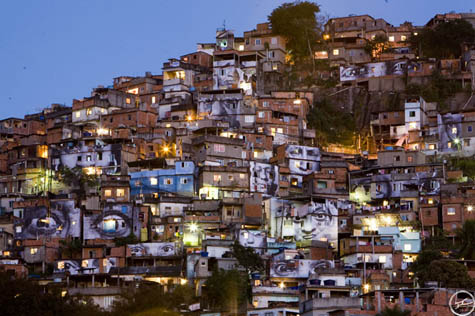
The Hills Have Eyes
Bacon is a health food!
Richie Hawtin's 10 most ridiculous ideasLabels: architecture, Art, Electronic Music, Environment, Food, Gadget, Humour, Law, Photography, Physics
:: Dan 16.5.09 [Arc] [0 comments]
...

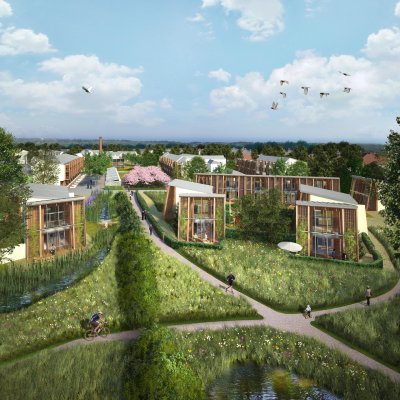
Can you tell me that story again?
:: Wednesday, April 22, 2009 ::
Larger image
Last week someone stuck in front of me an article about a proposed eco-village in Hanham, on the outskirts of Bristol. Interesting as it was, all I could focus on was the graphic designer's hidden joke. Note the child on the tricycle approaching the cross roads from the right. Notice the slightly faster moving but further off runner heading towards the same junction. Then notice the clearly distracted cyclist, his head on sidewise, some distance away but bearing down at great speed from the left. This scene is about to get very messy.
This prompted me to look up what's currently going on with the Elizabeth Shaw Chocolate Factory redevelopment not so far away. (See some of Lisa Furness's photos of the closed down building here.) It seems the inspiration for the new development has been taken from a Brothers Grim story illustrated by MC Escher about a hunted shed. Not one I'm familiar with I'll admit.Labels: architecture, Bristol, Comedy, Environment, graphics
:: Dan 30.4.09 [Arc] [0 comments]
...

5¢ Architecture
:: Monday, January 05, 2009 ::
"It’s no secret that architecture has been hit by the recession (yes, even that impenetrable bastion of technical wizardry, jargon, theory, and - oh nevermind). 27-year old Seattle resident John Morefield can attest: he was laid off not once, but twice in a single year as projects dry up and small firms tighten budgets. So what’s a boy to do? Watch Peanuts cartoons and hang out at the local farmers’ market?
"Why yes indeedy. Morefield’s concept for Architecture 5¢ — edificially inspired by Charles Schulz’s psychiatrist booth for Lucy — is bringing architecture to the people, and people to the architecture. For a nickel, passerby can ask questions that range from simple (”What’s the best insulation to use next to concrete in a basement?”) to complex (”We have a 700-square foot Seattle bungalow and want to add a second story because we’re expecting our first child… Help!”)."
[full story on flavorwire]
As an aside, there's an architect I'm working with on a new school at the moment. In meetings he makes sound effects as he sketches the ideas being discussed. It reminds me of the animation sequences from Rainbow. It tickles me every time. More people should soundtrack their lives like this. (Skip to 2:30 in the video if you don't have a clue what I'm on about.)Labels: Animation, architecture, TV
:: Dan 22.4.09 [Arc] [0 comments]
...

Catch-Up
"Xmas morning is the only time that London is (almost) empty of humans - so a morning spent cycling around town taking photos.":: Wednesday, December 24, 2008 ::
Motorway Map of the UK in the style of the London Underground Map
[^ both via lmg]
From BLDGBLOG:
In the winter of light
"There are architecture photographers [who] refuse to photograph anything from November up to February," Michiel van Raaij writes on his blog Eikongraphia. "In their view the long shadows and dimmed light intensity of the winter season compromises their work. The effect is that – in the architecture media – not only the sun always shines, but that it is also never winter."
Architects of the Near Future
Check the stills from the Dan Farmer film.
Warmed by Crematorium
I recently worked on the design of a retirement home next door to a crematorium. It seemed a bit presumptuous, if inevitable. This goes several steps further, but I like the green credentials.Labels: architecture, Environment, Maps, Photography, Urban Exploring
:: Dan 5.1.09 [Arc] [0 comments]
...
The Worlds Most Beautiful Libraries
A selection of the worlds most beautiful libraries.:: Wednesday, May 28, 2008 ::
HANDELINGENKAMER TWEEDE KAMER DER STATEN-GENERAAL DEN HAAGLabels: architecture, Art, Literature, Photography
:: Dan 24.12.08 [Arc] [0 comments]
...

Herding Cats
Atheists in the US are arguing amongst themselves about whether we/they need buildings that can fulfil the social function of a church in a community but without the religious baggage [Church of no God, via null.devivce].:: Wednesday, April 16, 2008 ::
It's something I've thought about before, especially as I work on a lot of developments where a church will plough money into a community centre that no-one else would be willing to stump up for. But then I think about what social functions would be performed in a building if you stripped out the religious requirements. What you a re left with is a multi-purpose social meeting space. Somewhere where people can meet to chat, probably with a small stage for performances. Something open to everyone, regardless of faith.
Then I realised we have it already, it's called a pub (although non-alcohol drinking faiths may take issue with this). It's basically something any well equipped pubic house can provide. As long as it's somewhere that provides enough in the way of variety of products, from tea, coffee and cakes during the day, to relaxed social drinking in the evening, and has a family friendly policy, I think it could cover all bases. Even a well equipped café could do the same. I suppose the key difference is that you would most likely be expected to purchase something when you were there, which churches sort of don't do. Sort of.
Update:
Thanks to abscond for the comment. You're right, a squat also fulfils all of these functions and avoids the consumerist problem. Although as a general rule they are not included in new developments. But I take your point, I can almost hear Naomi Klein screaming at my proposal to further reduce public space and replace it with a commercial alternative. So I’m changing my mind and proposing that all new residential development areas have a purpose built squat included. It is, unfortunately, a flight of fancy of the likes usually confined to bldgblog, but it’s an alternative to the Church of no God proposal.Labels: architecture, Religion
:: Dan 28.5.08 [Arc] [1 comments]
...
Cairo Sound City
"We’re not just talking typical city noise," the article says, "but what scientists here say is more like living inside a factory.":: Saturday, March 15, 2008 ::
Bldg Blog on noise in Cairo
"Provided I can ever get my act together on this, I've got a long and totally fascinating interview with Jace Clayton, aka DJ /rupture, coming up here on the blog, in which we discuss the sonic qualities of cities, focusing on New York and arriving there via Marrakech, Barcelona, and even Rennes, France."
That sounds really interesting. You can, incedntally, hear DJ/Rupture's appearnce on the Goatlab Radio show here:
GoatLab Radio with Parasite and special guest DJ/Rupture - October 2007
Bldg Blog continues, "I'm tempted to organize something called World Noise Day*. Make your city as loud as possible. Take advantage of car horns, personal stereos, supermarket broadcast systems, and the local radio. Play Merzbow† all day, cruising loops in boom cars. Rebuild Luigi Russolo's intonarumori. Install Japanese war tubas and British sound mirrors throughout the city. Turn on hair dryers. Yodel. Record the sounds of noise in the morning – and play them again that night, much louder."
* Of course our friend Shitmat already runs an annual National Noise Day here in the UK.
† And coincidentally I have a gig with Merzbow on Friday! He's playing at the Croft just before Goatlab starts (thanks to some strange booking thing I won't go into).
Look like the UK is one step ahead here.Labels: Acoustics, architecture, Noise
:: Dan 16.4.08 [Arc] [0 comments]
...
Anechoic Chamber Architecture
:: Tuesday, December 04, 2007 ::
Oobject's Guide to Anechoic Chamber Architecture
"In this kind of space, no one can hear you scream. Anechoic chambers use spiked walls to eliminate echoes, the end result might literally sound dull but the visual effect can be stunning, such as at the enormous anechoic hangar. Vote for your faves."
[via Music Thing]
"There is nothing not to love at Oobject's Guide to Anechoic Chamber Architecture. Above is AFJ International's tank-sized chamber, and the Auditory Localization Facility is a person-sized loudspeaker-filled geodesic sphere packing a generous punch of awesome. Less high-minded readers might also enjoy Nick Knight's rather splendid fashion/audio crossover The Sound of Clothes, which includes several not entirely SFW videos."Labels: Acoustics, architecture, Fashion
:: Dan 15.3.08 [Arc] [0 comments]
...

Warehousing
bldgblog on The future warehouse of unwanted books:: Wednesday, October 24, 2007 ::
Coincidentally I've been thinking about libraries recently. I was back up in Manchester over the weekend. As well as taking some time to do some Christmas shopping I made a point to take the time to wander around and take in the sights again, too see what has changed in the six years since I lived there. In places quite a lot had, in others it was reassuringly familiar. I loved wandering around Vinyl Exchange and Piccadilly Records and Afflecks Palace* again.
* Why is it full of 13 year olds? With their parents. Buying them pink studied off the hip belts. And that's just the boys.
After enjoying the refurbished Art Gallery and some bratwurst from the obligatory German market I found myself wandering into the central library for a look around (and to abuse the toilet facilities). I spent hours here as a student - the library, not the toilets - and love the building. An online student guide tells me it is "the largest local library in Britain, created in 1934 as a circular building based on Rome's Pantheon." So there you go. I'd love to spend a few hours in there with my camera. I'm fascinated by the odd little stairways all over the place, roped around the top as they descend into the floor, ending in a dark oak door marked "staff only" at the bottom.
John Rylands library is even more impressive in its Gothic splendour.
[more on architecture in Manchester]
With this fresh in mind I read the first link above and the related Guardian article - Inside the tomb of tomes
"This warehouse is being built to house the books and journals that no one wants. With the British Library's UK collection growing at a rate of 12.5km of shelf space a year, is the notion of the copyright library really sustainable?" [guardian]
"In other words, a relatively random piece of 100-year old legislation [the 1911 Copyright Act] has begun to exhibit architectural effects. These architectural effects include the production of huge warehouses in the damp commuter belts of outer London. These aren't libraries, of course; they're stockpiles. Text bunkers." [bldg blog]
It's a shame that this is what we have come to. At the exponential rate the data we produce is growing, how are we going to continue to store it? Digital storage seems the obvious answer but brings further problems with it.
"It's been estimated that €3bn are lost across Europe [over an unspecified time period] entirely due to bad management of digital files in libraries ... Would we have enough confidence to throw everything away? Would you?"
Rory McLeod, digital preservation manager at the British Library quoted in The Guardian
The Internet Archive sets about trying to solve the same problem for digital data.
"The Internet Archive Wayback Machine contains almost 2 petabytes of data and is currently growing at a rate of 20 terabytes per month. This eclipses the amount of text contained in the world's largest libraries, including the Library of Congress."
Google Books is trying to get searchable versions of books from many great libraries online.
We are warned that Data growth outruns ability to manage it [Computer Technology Review, Feb, 2002]
Wikipedia: Modelling Wikipedia's growth
And then how do we decide what data to store? Said copyright act states that everything printed should be stored. Do we need to do the same online? Right down to the live journals and the cat photos and the porn? Maybe so.
"The Bibliothèque Nationale in Paris is, for the first time, opening its extensive collection of pornographic materials to the public. Part of the contents of the forbidden section, officially known as "l'Enfer" (Hell) and consisting of pornography and erotica from the 17th to 19th centuries."
[via null device]
"Only bona fide academic researchers have been allowed access to the "L'Enfer" collection until now. The omnipresence of erotic or pornographic images in the modern world has persuaded the French national library that it is permissible, finally, to open the doors of Hell.
"The exhibition reveals some interesting, historical differences in erotic tastes. The earliest, 17th and 18th century, material dwells on the straightforward pleasures of the flesh. The celebration of the pleasures of pain – imposed or submitted – begins with the Marquis of Sade in the late 18th century. Pornography from the French Revolutionary period is mostly political, especially scurrilous allegations about the sexual appetite and imagination of Marie Antoinette. The 19th century concentrates on the blazing sexuality lying below the stern conservative or domestic exterior of life."
[via the independent]
If this too needs to be saved, then this all has knock on effects on the amount of server space required, which I thought about writing about until bldgblog saved me the effort with this follow-up post - Server Rooms and the Future of Humanism - which likens the environmental impact of server farm to the carbon footprint of an SUV.
"Is this the long-term historical irony of humanism – with its museums and libraries, its institutionalized nostalgia – that all these air conditioned warehouses and rural server farms don't represent the indefinite continuation of the humanist project but, rather, that project's future ecological demise?"
This brings me to further musing on the subject of data organisation. I've noticed that the job title Information Architect seems to be growing in popularity. Architects love to describe their discipline as "the most public of all art forms" (I believe this quote is attributable but I can’t remember to whom). It seems obvious that someone involved in designing computer networks would hope some of that glamour would rub off through use of the word.
One day this may not seem as jarring a comparison to the layman as it seems now. I'm sure if I stopped someone on the street outside now and asked them what an architect does the response would be something like, "they designs buildings and stuff, dun 'em?" [can you tell I'm in Bristol as I write?] Yet if I asked what an Information Architect does the responses will probably range from "someone who designs computers?" to "something to do with the internet?" to stunned silence.
As we move towards a future where our virtual existence is increasingly blurred with meat space will we increasingly see the people behind these systems as creating a form of public art? "That GUI is very modernist in style don't you think." "I like the gothic phone system they have in that building." "I though I'd add some Art Deco influences to this database." And so on. I've just re-appropriated existing stylistic names, when logically on new names created from no on will be appropriated in that way, but I hope you see where I'm coming from. This could be a two way flow, ideas from IT could be integrated in architecture too, creating skinable buildings, hyperlinking lifts, rss feeds of the people passing through reception, but I'm sure things like that are being tried already.Labels: architecture, Literature
:: Dan 4.12.07 [Arc] [0 comments]
...

Poème Electronique
Iannis Xenakis: Phillips Pavilion, Poème Electronique, Edgard Varèse [Brussels 1958]:: Sunday, September 30, 2007 ::
I've read a lot about, and listened to a lot of, Xenakis’s music, so it's interesting to see something pop up about his architecture now and again. Especially when it was designed as a specific audio/visual display space.Labels: Acoustics, architecture, Art, Visuals
:: Dan 24.10.07 [Arc] [0 comments]
...

BLDG BLOG
BLDG BLOG is a brilliant blog of "architectural conjecture, urban speculation & landscape futures," that I have just discovered thanks to Natali linking to this post about Hot-Mapping. Apparently Haringey Council have been busy flying planes over their district taking thermal images of the area. The council explains it here and full maps of the region are available here. It's interesting to look over. I would genuinely be interested to see how my own house compared to others around it. I'm sure it would be exactly the same as all the others on the estate (it is new build) but I'd really like to know how it compares to houses of different ages and see how age and build vary. The comment on the blog bring up privacy issues, although I'm not sure how much heat loss your house suffers from is a private issue? As long as vigilantes don't start searching out energy loss offenders I think it's pretty harmless from that point of view and I think I'd like to see more councils doing it.:: Wednesday, February 21, 2007 ::
The blog also has two noise related posts from the last week or so. This one following up an interview with neurologist Oliver Sacks about the affects of noise on people. It's interesting although, as with psychology generally, it relies heavily on the exceptional cases rather than the norm. I guess that makes things a lot easier to test and interpret.
This lowest common denominator approach is similar to the way the World Health Organisation Guidelines for Community Noise are based on preventing adverse health affects in the most sensitive population. From conversations with the papers co-editor Birgitta Berglund I know that children in particular are her largest concern. Perhaps by designing to ensure the protection of the most sensitive we can bring down average noise levels over a period of time?
(The Erik Satie anecdote sounds like he failed to do Eno was doing with Music for Airports etc. I imagine these days you could get away with it without anybody flinching. Sometime a space without background music seems odd.)
There is also a post about intentional additions to urban noise to make cities sound more "musical" and to help mask more unpleasant sounds. Soudscaping cities is a bit of a buzz word with architects these days and I've been involved in the soundscaping of some major district developments in the middle-east (without ever actually going there annoying!) I'm interested to see how this study pans out.Labels: Academic, Acoustics, architecture, Art, Maps, Noise
:: Dan 30.9.07 [Arc] [0 comments]
...

Castles in the Air
"Want to live in a home designed by a famous architect? Then get a council flat in Madrid."
Nicely timed article about architecture in Madrid. I was upset we weren't going to be able to find time to go and see some Gaudi buildings in Barcelona while we're over there, but this should provide some alternatives for the visit.Labels: architecture, Madrid, Spain
:: Dan 21.2.07 [Arc] [0 comments]
...
